
Starting with AI - A Mental Scaffold
I started this blog post for my fellow EO GRIT members - and for anyone else who’s been trying to figure this out. This spawns from a conversation we had around a dining room table at Historic Banning Mills. There is something magical about talking AI in a place with a summer camp vibe and no internet or cell service to speak of.
So you own a business. That means you are in the middle of a mind storm of concerns and opportunities, responsibilities and ideas, all swirling around inside your head at once. Thank God you have ADHD! You see connections other people don’t and you can (usually) pay attention to fifty things at once. It’s like a superpower. Unless of course you miss one too many details.
And now you have one more thing on your plate. AI. Yeah. AI. It’s either going to save you or put you out of business. Either it can make your life easier, or you have to reinvent your entire business to be “AI Forward” (what ever that means). Dear Lord, where to even begin?
Welcome, fellow squirrel-chaser. I wrote this article to share what I have learned and experienced in the hope it helps you save some time and energy.
Now, not everyone will agree with how I think about AI. How could they? But what I’m going to share with you is how I think about working with Large Language Models (LLMs), what most people call “artificial intelligence”. If you meet someone who thinks different, listen to them, explore what they have to share. But I can only write from my experience so that is what you are going to get. My thoughts, mental models, and experiences.
I trust you to take what’s useful and leave what’s not.
What follows is one way to work with AI, not the way to work with AI.
A scaffold, not a blueprint.
My biggest gripe with studying engineering in college was that they would dive into all this detail without telling you how all the pieces fit together.
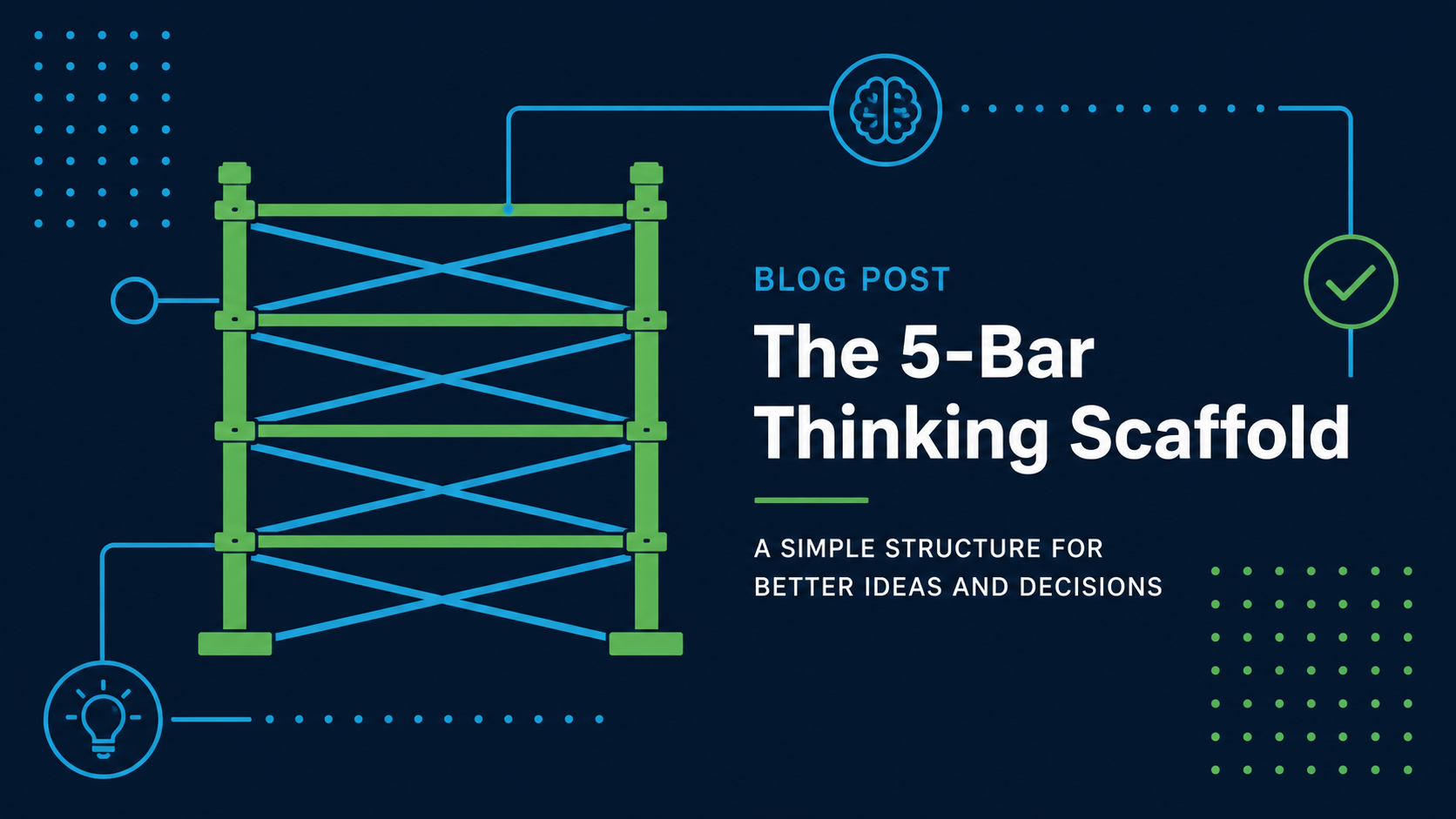
I like scaffolds because they give you the general shape of something while it is under construction. Not only that, they deliver the added benefits of giving you room to work and leverage to lift building blocks into place. Consequently, I create mental scaffolds when I am learning complex topics. A mental scaffold makes a subject easier to understand when I am learning.
Here’s my scaffold for thinking about AI. I break working with LLM’s into five modalities, based not on what the software can do, but on how I use it:
- General Chat
- Project Chat
- Cowork
- Code / Skill Work
- Autonomous Work
Underneath these five, I see two big buckets:
AI that enhances me: I’m at the keyboard. I ask, it responds. It amplifies my thinking, my speed, my capability. Nothing happens unless I start it.
AI that has a job: It does the work whether I’m at my keyboard or not. Like a good employee, it knows what to do and gets it done.
Most people have only ever lived in Bucket 1. And honestly? That is fine, but knowing Bucket 2 exists can open up new opportunities.
Over the next few posts I’ll walk through each mode with real examples, including a hiring story that took us from 2–3 applicants a month to 20 a week.
But first…
Want to start exploring?
Paste this into Claude, ChatGPT, or Grok and see what happens:
“I’m a business owner who’s new to AI. Walk me through the different ways I can use it — from simple chat to more autonomous work — using plain language and real business examples.”
Or, if you want to get specific, try this, only in Claude paste the following prompt:
Explain to me the difference between each of these modes, and how people work with them when using claude:
- general chat
- projects
- cowork
- Claude code
- self directed agents like openclaw
I believe you will get an interesting answer, but as always, your mileage may vary.
Until next time.
Scott